Your product's digital identity
Discover the essential elements that make up a product's digital identity according to European Digital Product Passport (DPP) standards.
What is the Digital Product Passport (DPP)?
The Digital Product Passport (DPP) encompasses all essential information that enables the identification, tracking, and understanding of a product throughout its lifecycle. This information is structured according to European regulations, particularly ESPR (Ecodesign for Sustainable Products Regulation) and GPSR (General Product Safety Regulation).

Common elements in all DPPs
All digital product passports include these essential pieces of information:
Product identification
- GTIN (Global Trade Item Number)
- Model
- Batch number
Manufacturer and origin
- Manufacturer information
- Place of production
Composition and materials
- Material details
- Substances used
Environmental characteristics
- Environmental footprint
- Ecological impact
Consumer information
- Usage instructions
- Maintenance instructions
- Repair/reuse guides
Certificates and compliance
- Certifications
- Compliance documents
- Regulatory compliance
Supply chain
- Traceability
- Supply chain information
End of life
- Recycling options
- End-of-life instructions
- Collection points
Content specific to each product category
Each product category includes specific information tailored to its characteristics:

Electronics
Information on repairability, energy consumption, and certifications.
- Repairability and spare parts availability
- Energy consumption and efficiency
- EPREL compliance
- RoHS compliance

Textiles
Fiber composition, care instructions, and durability.
- Fiber composition with percentages
- Care instructions (washing, drying)
- Durability and recyclability
- ESG transparency and ethical sourcing

Furniture & mattresses
Component traceability, durability, and repair guides.
- Component and material tracking
- Durability and recyclability
- Reuse and repair guides
- REACH compliance
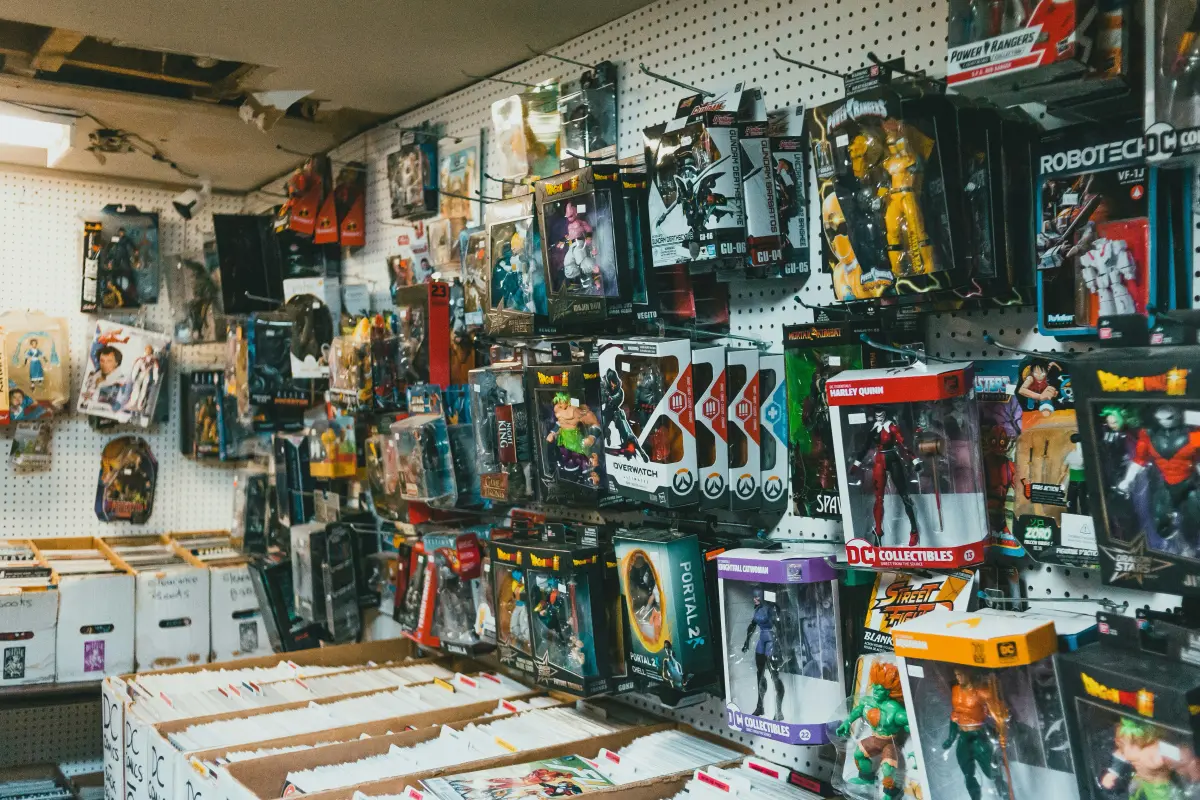
Toys
Chemical safety, recommended age, and TSR compliance.
- Chemical safety and materials
- Recommended age
- Chemical safety proof
- TSR (Toy Safety Regulation) compliance

Building materials
Composition, certifications, and CPR compliance.
- Details on materials used
- CPR (Construction Products Regulation) compliance
- Construction certifications
How to access the DPP?
Not just QR codes: several technologies enable product traceability and identification by sector.
QR code
Most common, on label or packaging. Easily scannable with a smartphone.
NFC
No visual tag, tap your phone. Ideal for textiles, luxury, electronics.
Data Matrix
Laser engraving on components (batteries, motherboards). Tamper-proof, < 0.5 mm.
Manual entry
Serial number or short ID. Already available on Verisav for all products.
RFID
Widely used in logistics (Decathlon, retail). Distance reading, no line of sight.
Firmware / Software Handshake
DPP embedded in device (e.g. Settings > Digital Passport). Native access in system menu.
Watermarking (Digimarc)
Invisible code in design or packaging. Detected by camera, entire surface.
By sector
Electronics
QR code, NFC, Data Matrix, firmware
Textiles
Washable NFC, RFID, QR on label
Furniture and mattresses
QR label, barcode, lot number
Toys
Engraved QR, lot number, CE label
Building materials
Data Matrix, QR, barcode
Automotive
Data Matrix, RFID, VIN, battery passport
Batteries
Laser Data Matrix, QR, unique identifier
Steel and iron
Laser marking, QR, lot number
Verisav Technology: RDF/OWL Vocabularies and Standards
Verisav provides standardized RDF/OWL vocabularies aligned with international protocols to ensure DPP interoperability and compliance.
Industrial interoperability (AAS / ECLASS)
Verisav is compatible with the Asset Administration Shell ecosystem (IEC 63278-1) and ECLASS classifications for seamless integration.
We provide an AAS Submodel template "Verisav DPP/SAV" and a mapping document between our vocabulary (MaterialProvenance, materialName) and ECLASS IRDI identifiers. Industrial actors (especially in Germany) can reuse our vocabularies while staying aligned with AAS and ECLASS.
UNTP (United Nations Transparency Protocol)
Verisav is aligned with the UNTP protocol developed by the United Nations to ensure traceability and transparency of supply chains. Our DPP vocabulary supports UNTP requirements for sustainability, material provenance, emissions, circularity, and conformity claims.
Learn more about UNTPVerisav RDF/OWL Vocabularies
Verisav has developed three RDF/OWL vocabularies officially validated on Linked Open Vocabularies (LOV):
DPP Vocabulary
Vocabulary for Digital Product Passports (DPP) managing product lifecycle, warranties, repairs, and compliance with EU regulations (ESPR EU 2024/1781). Aligned with GS1 Digital Link, UNTP, and EU Business Wallet (EBW).
RMA Vocabulary
Vocabulary for Return Merchandise Authorization (RMA) and service ticket management, standardizing communication between consumers, retailers, and repairers.
WTY Vocabulary
Vocabulary for machine-readable warranties and contracts, enabling automated decision-making for after-sales service (SAV) and financial liability.
Semantic Web and Interoperability
Verisav vocabularies use Semantic Web standards (RDF/OWL) to ensure interoperability, reusability, and compatibility with existing systems. DPP data is structured in JSON-LD, Turtle, and RDF/XML for easy integration.

Veramo Framework
Verisav uses the Veramo framework, an open-source reference solution for issuing and verifying Verifiable Credentials (W3C VCDM 2.0). Veramo ensures cryptographic security, DID (Decentralized Identifiers) management, and compliance with W3C standards for verifiable credentials.
Issuance of W3C VCDM 2.0 compliant Verifiable Credentials
Cryptographic signature verification
DID management (did:web, did:key, ready for did:ebw)
EU Business Wallet (EBW) support
Open-source framework maintained by the community
Benefits of Verisav Technology
Guaranteed interoperability with international standards (GS1, UNTP, EBW)
Vocabularies validated on Linked Open Vocabularies (LOV)
Multi-format support (JSON-LD, Turtle, RDF/XML)
GraphQL and REST APIs for programmatic access
Compliance with W3C and Schema.org standards
EU Business Wallet (EBW) and Verifiable Credentials
The EU Business Wallet (European Business Digital Wallet) strengthens trust and security of DPPs:
The EU Business Wallet is a harmonized digital identity infrastructure proposed by the European Commission that extends the eIDAS 2.0 framework to organizations. It enables businesses to create, store, and share verifiable credentials for their DPPs.
Verifiable Credentials (W3C VCDM 2.0)
DPPs can be issued as W3C Verifiable Credentials, guaranteeing data authenticity and integrity through cryptographic signatures. Verisav uses the Veramo framework to implement Verifiable Credentials securely and in compliance with W3C standards.
European Unique Identifier (EUID)
Each business has a unique EUID across all 27 EU member states, simplifying cross-border operations and reducing administrative burden.
Secure Sharing
DPP data can be securely shared between supply chain actors via EBW, with integrity verification and timestamping.
Benefits
Instant business identity authentication
Issuance of verifiable credentials for DPPs
Secure data sharing with guaranteed integrity
Reduced administrative costs (up to €5 billion in savings expected)
Timeline
Regulation proposal published in November 2025. Implementation expected for 2027-2028, synchronized with DPP regulatory deadlines.

Regulatory compliance
The Digital Product Passport (DPP) ensures compliance with major European regulations:
ESPR
Ecodesign for Sustainable Products Regulation - Regulation on ecodesign for sustainable products
GPSR
General Product Safety Regulation - General product safety regulation
REACH
Registration, Evaluation, Authorisation and Restriction of Chemicals - Registration, evaluation and authorization of chemicals
RoHS
Restriction of Hazardous Substances - Restriction of hazardous substances